
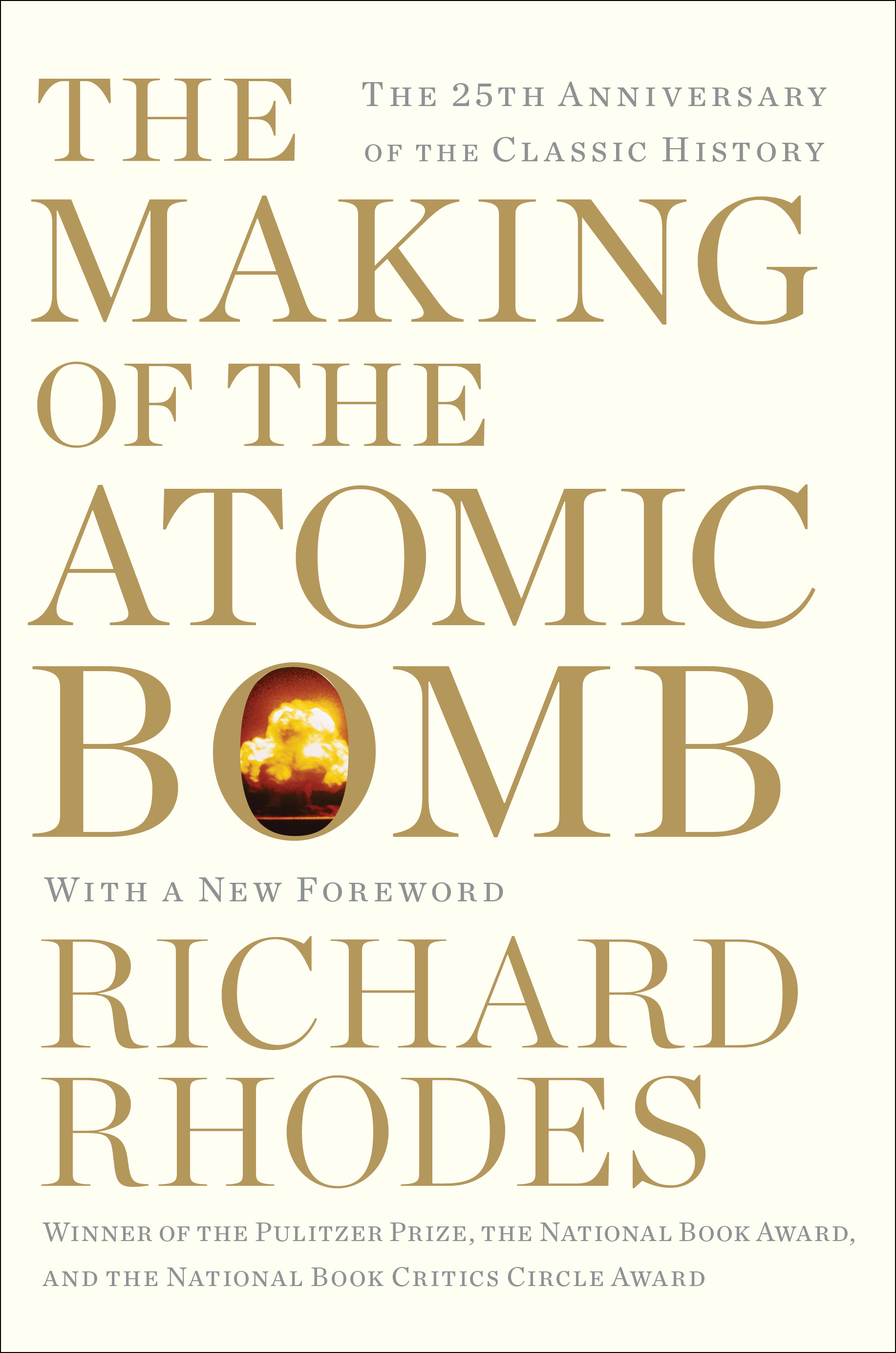
Well, after finishing this massive tome I can see why it won a Pulitzer prize. It is the detailed story of the background physics and chemistry research, the Manhatten project to develop the bomb itself, and the development of the aircraft and techniques to drop it. There is also some good coverage of the politics in all the involved countries and the factors that lead up to the decision to actually drop the bomb on a populated area.
Truth be told I did put this book aside for quite a while after getting about a third of the way through - largely because the history to that point was (necessarily) very disjoint and seemed to consist of little more than potted biographies of various researchers and the contributions that made but without an overall narrative flow. I guess this reflects the messy reality of scientific progress rather than the needs of the story teller!
The abandonment was ill timed because as soon as I picked it up again it was the late 30s and the story really took off and I became totally fascinated. The abandonment was”project” was really an interlinked set of developments and research efforts, each of which was absolutely massive in scale. At several points I broke off to visit Google maps to look up various sites, Los Alamos, Hanford, Oak Ridge and Tinian Atoll.
Again, truth be told I found some of the descriptions of the effects of those on ground zero quite difficult to read (especially over lunch) but they were necessary for the complete story.
Overall, an excellent book that does real justice to everyone involved. Recommend reading for historians and those who want to know how to run large projects.